2026-06-27 · Updated 2026-07-26
How AI Influencers Are Made, Used, and Disclosed
How marketers and creators build AI influencers: consistent AI avatars, real brand campaigns, monetization paths, and the disclosure rules to follow.
Last updated: July 26, 2026
An AI influencer is a fictional character a brand or creator runs like a real one: a recurring face, a name, a posting schedule, and sponsorships. The hard part is not the first pretty image. It is keeping the same person believable across hundreds of posts, then staying inside advertising rules while you do it.
This walks a marketer or solo creator through how these characters get built, where brands put them to work, how they earn, and what you must disclose.
Quick answer: how do you launch an AI influencer?
Pick a narrow niche and a single face, lock that face so it repeats, then post on a real schedule and label the account as AI.
The workflow most teams settle into:
- Define one character: niche, age range, look, voice, and the three topics they post about.
- Generate a reference face you can reproduce, then build a small library of locked angles and expressions.
- Place that face into new scenes (outfits, locations, products) without the features drifting.
- Clean each frame: fix hands, remove artifacts, upscale, and match lighting across the set.
- Write captions in the character's voice and publish on a fixed cadence.
- Disclose the account is AI in the bio and in paid posts.
For the generation steps, an AI avatar generator handles the face, an AI image generator builds new scenes, and an image upscaler cleans the final export. The discipline that makes it work is consistency and honest labeling, not the prompt.
What is an AI influencer?
An AI influencer (or virtual influencer) is a computer-generated persona that posts, builds a following, and takes brand deals, even though no physical person sits behind the face. Lil Miquela and Aitana López are the examples most marketers already know.
Two kinds are worth separating, because they cost very different amounts to run:
- Fully synthetic characters generated from scratch with AI tools. Cheap to start, fast to iterate, easy to lose consistency.
- Studio-built CGI personas modeled and rendered by an agency. Expensive, slow, but tightly controlled.
This article focuses on the first kind, since that is what a creator or a small marketing team can actually launch this quarter. For background on how the format grew, the Wikipedia entry on virtual influencers tracks the better-known accounts and the agencies behind them.
How do you create a consistent AI influencer character?
Consistency is the whole game. A face that shifts between posts reads as a stock-photo account and loses followers fast.

Work in this order:
- Lock a reference. Generate one strong portrait, then reuse it as the seed or reference for everything else. This is where a consistent AI avatar workflow earns its keep.
- Build an expression sheet. Render the same face smiling, neutral, three-quarter, and profile. Keep these as your control set.
- Hold features steady. Reuse seeds, character references, or a trained model so eye spacing, jawline, and skin tone stay put across scenes.
- Stage new scenes. Drop the locked face into outfits, cafes, gym, travel shots. Change the world, not the person.
- Retouch every frame. Inspect hands, teeth, ears, and jewelry at full zoom. Fix or discard broken frames before they ship.
The techniques behind a believable face come straight from portrait work. The methods in AI portrait generation and realistic AI portraits apply directly: lighting that matches the scene, natural skin texture, and eyes that point the right way.
| Stage | What it controls | Tool to reach for |
|---|---|---|
| Reference face | The identity you repeat | AI avatar generator |
| New scenes | Outfits, locations, products | AI image generator |
| Background swap | Clean product or studio plates | Background remover |
| Final polish | Sharpness and print-ready size | Image upscaler |
One practical caveat: generate more frames than you need. A 70% keep rate is normal, and the rejects are usually hands and earrings, not the face.
Where do brands actually use AI influencers?
Brands reach for synthetic personas when they want a face they fully control, can run in many markets, and never have to reschedule.
Common, real use cases:
- Always-on product demos. A skincare brand posts a consistent face applying the routine, with no model day rates.
- Localized campaigns. The same character speaks to several regions with adjusted wardrobe and captions.
- Pre-launch teasers. A character builds anticipation for a product that is not photographable yet.
- Catalog and UGC-style ads. Lifestyle frames for paid social that would otherwise need a full shoot.
A clothing label, for example, can show one persona in 40 outfits in an afternoon, then push the best frames to AI-driven social media content for the week's posts. The trade-off is trust: audiences engage less once they suspect a face is fake and was never labeled, so the disclosure step below is not optional.
How do AI influencers make money?
The money looks like ordinary creator revenue, minus production costs and scheduling. The character still has to earn an audience first.
| Model | How it works | Best fit |
|---|---|---|
| Sponsored posts | Brands pay per post or per campaign | Niche accounts with steady engagement |
| Brand ownership | A brand runs its own persona as a channel | Companies wanting full control |
| Affiliate links | Commission on tracked sales | Product-review and shopping niches |
| Licensing the character | Rent the persona to other brands | Agencies building a roster |
| Digital products | Presets, guides, wallpapers in the persona's style | Art and design niches |
A few honest notes from how these accounts behave:
- Engagement rate matters more than follower count for sponsor pricing.
- A clearly labeled AI account can still sign deals; some brands prefer the control.
- Affiliate and licensing income is steadier than one-off sponsorships.
For art-led personas, the styling techniques in the AI art generator guide help you sell a recognizable visual signature rather than generic renders.
Do you have to disclose that an influencer is AI?
Yes. If the account promotes products, you follow the same advertising rules a human influencer follows, and the synthetic nature of the persona is itself material information.
In the United States, the FTC's disclosures guidance for social media influencers requires that sponsorships be clear and unavoidable. Apply it like this:
- Mark every paid or gifted post with a plain label, such as "ad" or "sponsored," placed where people actually see it.
- State in the bio that the account is AI-generated or virtual.
- Do not have the character claim to personally use or physically test a product it cannot.
- Keep claims truthful; a fictional face does not excuse a false statement.
Platform rules add a second layer: several networks now require a label when content is AI-generated or significantly altered. Check the policy for each platform you post on, since the wording and placement they accept differ.
What can go wrong before launch?
Most failures are avoidable and show up in the same places every time.
- Face drift. The character slowly changes. Fix it by reusing your locked reference and expression sheet for every batch.
- Broken hands and jewelry. The fastest tell. Inspect at full zoom and discard bad frames.
- Generic look. A face that could be any stock model gets no followers. Give the character a specific style, recurring locations, and a point of view.
- Hidden AI status. Skipping disclosure risks the account and any brand attached to it.
- No posting rhythm. Sporadic posting kills reach faster than imperfect images.
A quick pre-publish checklist:
- Same face as last week, confirmed against the reference.
- Hands, teeth, and accessories checked at full zoom.
- Lighting matches the scene, not a pasted cutout.
- Caption sounds like the character.
- Disclosure present in the bio and on any paid post.
If a frame fails the first two checks, regenerate it. Shipping one broken hand undoes a month of consistency. New to the workflow? The FAQ and the tool library on the homepage cover the avatar, generation, and cleanup steps in order.
Frequently asked questions
Do you have to disclose that an influencer is AI?
Yes, on every platform that matters. Instagram, TikTok, and YouTube all require labeling AI-generated or synthetic media, and the US FTC requires clear disclosure on any sponsored or endorsement content regardless of whether the persona is human. Hiding AI status risks the account, the brand deal, and legal exposure under advertising rules.
Can an AI influencer monetize the same way a human does?
Largely yes — sponsorships, affiliate links, and merch all work the same way. The differences are tax and contract treatment (the persona is an owned asset, not a person) and brand hesitancy: some advertisers will not place campaigns on AI personas. Disclosure up front filters out the brands that would object later.
What is the hardest part of running an AI influencer?
Consistency, not generation. Producing one good image is easy; producing the same recognizable character across hundreds of posts over months is the real work. Face drift, changing style, and broken details accumulate unless you lock a reference image and an expression sheet and check every batch against them.
Image credits
Article images are sourced from Pexels and stored locally for stable page rendering.
Use the free tools while you follow the guide.
Keep reading
2026-09-13
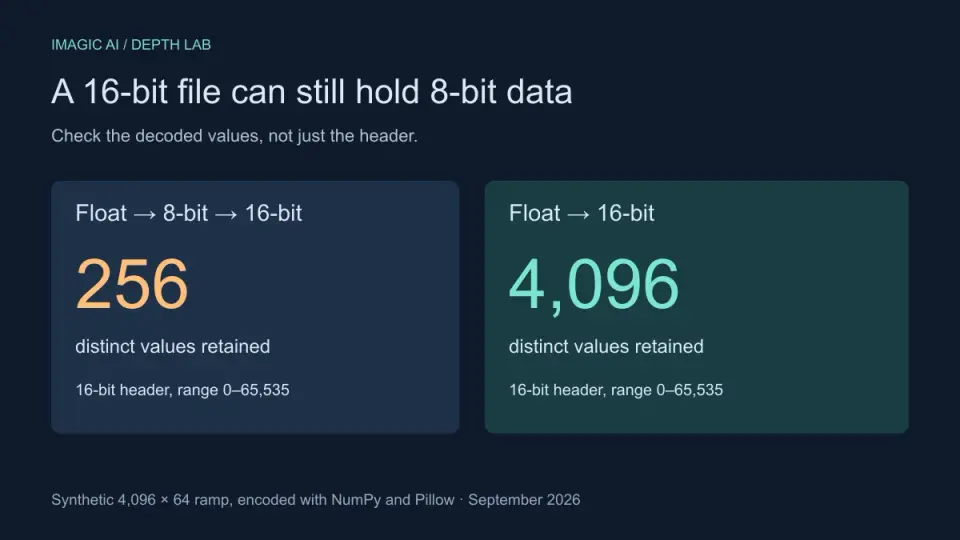
16-Bit Depth Maps: Fix Banding and Verify Your PNG
Fix stair-stepped or inverted depth maps with a reproducible 8-bit vs 16-bit PNG test, a file inspection script, and a practical Blender import checklist.
2026-09-13
GIF Maker From Images: Build Animated GIFs That Load Fast
Turn a set of images into an animated GIF for web and social media. Real frame timing, size limits for each platform, and when to choose GIF over video.

2026-09-13
How to Blur Faces and License Plates Before You Post
Blur or pixelate faces and license plates so they stay unreadable. Which method actually anonymizes, what fails, and how to avoid leaking EXIF location data.